How to use this section
Read the world around the fish
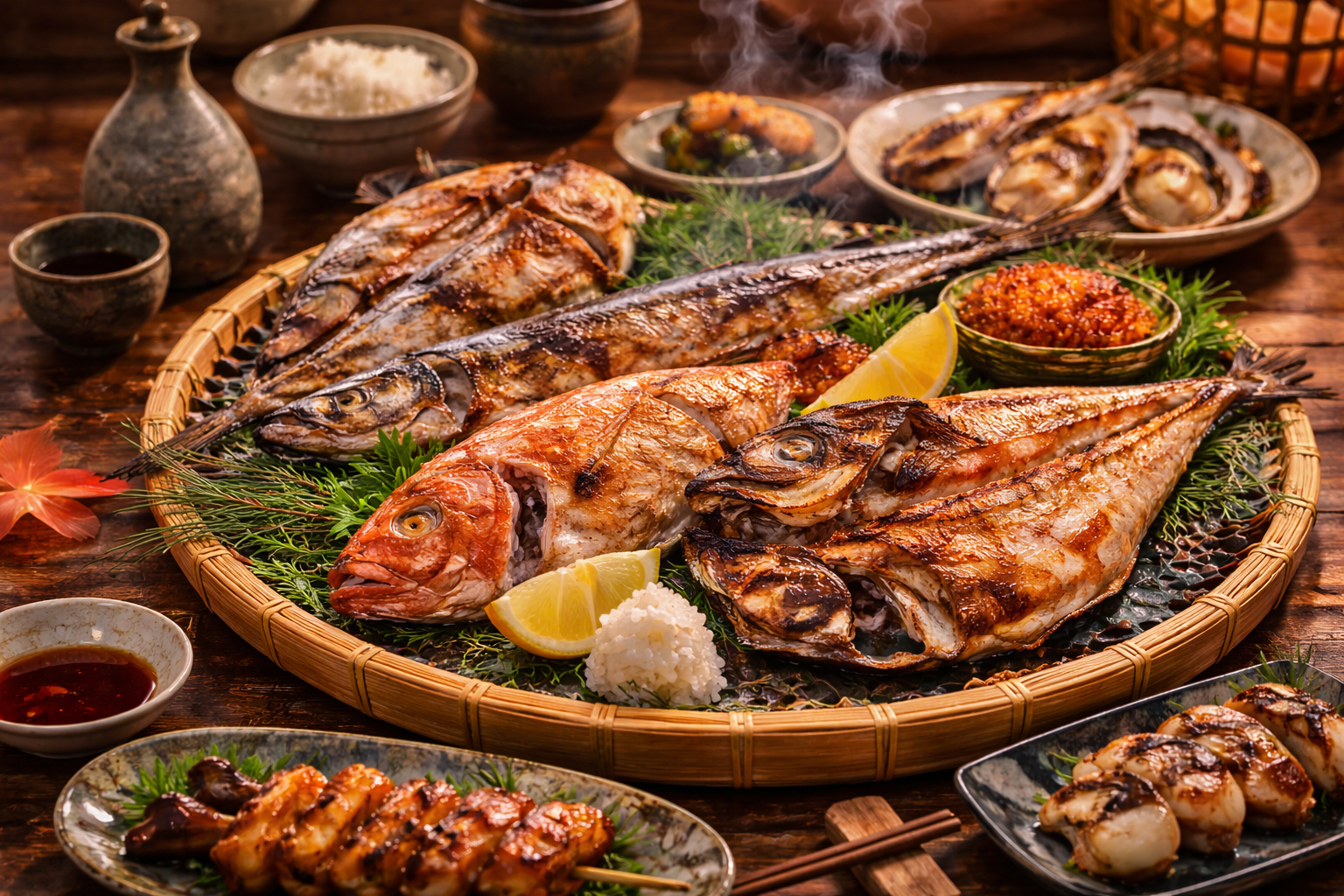
The species pages focus on the fish itself. The regional pages focus on the sea. The seasonal pages focus on timing and mood. The culture pages focus on everything around the fish: the storytellers, the market, the sushi counter, Edo’s urban ingenuity, and the everyday greatness of grilled fish.
In other words, this section asks what happens after the fish is caught. Who values it? Who serves it? Who explains it? Who makes it memorable? Once those questions enter the room, fish stops being a simple entry in a catalog and becomes a living part of Japanese culture.
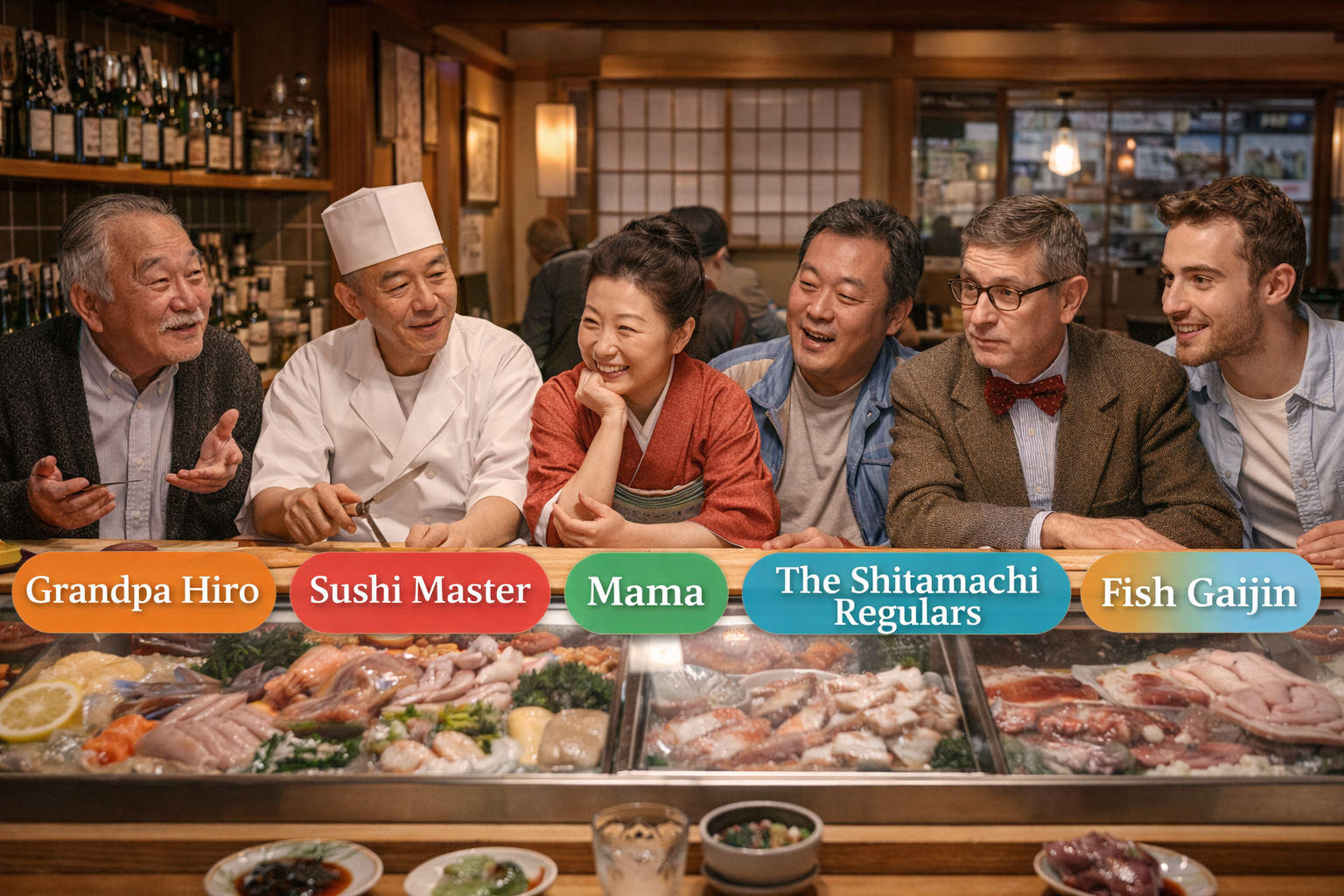
Storytellers
Meet Grandpa Hiro, the sushi master, Mama, the regulars, the professor, and the gaijin.
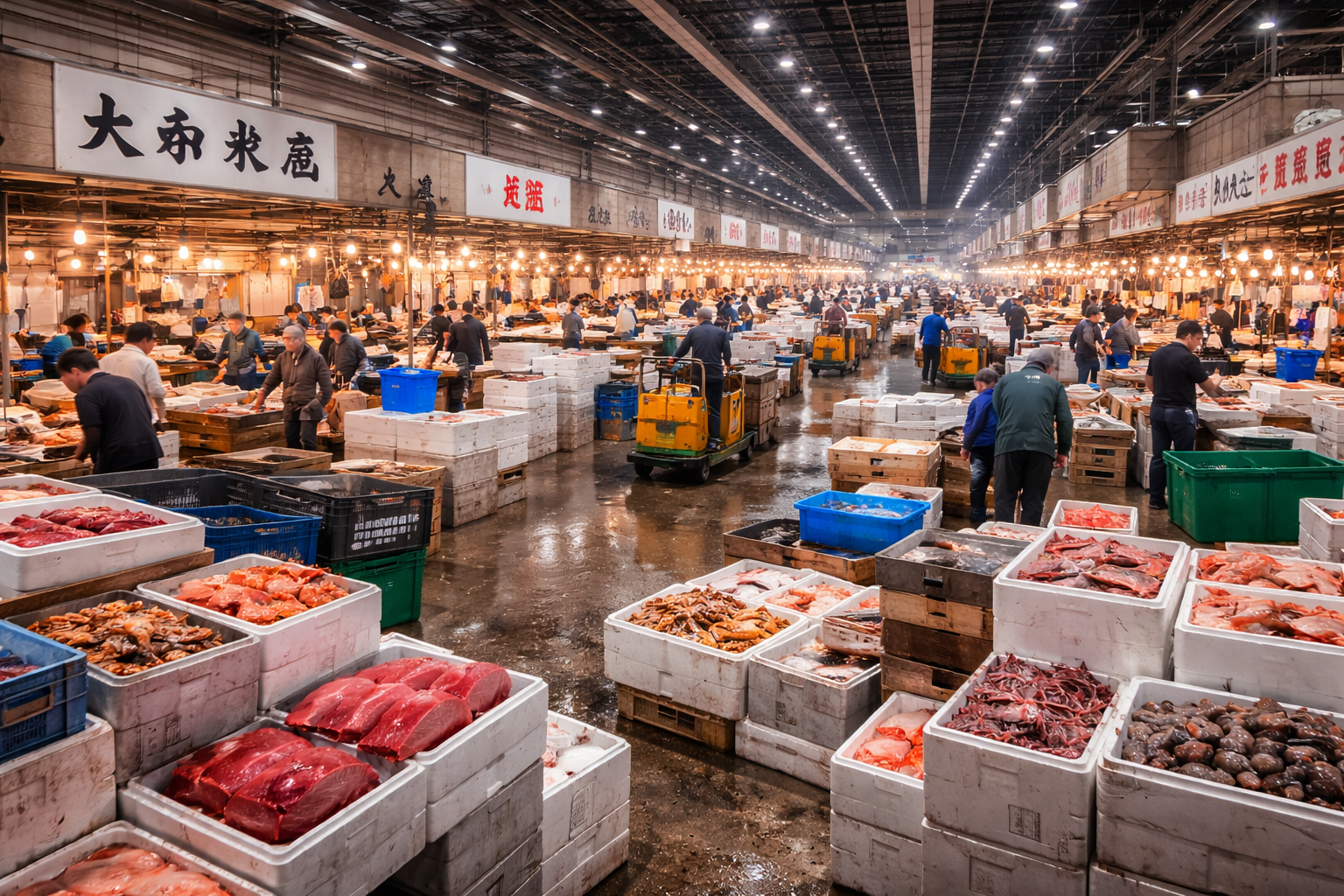
Toyosu Market
The giant urban stage where seafood is compared, priced, and sent into Tokyo’s appetite.
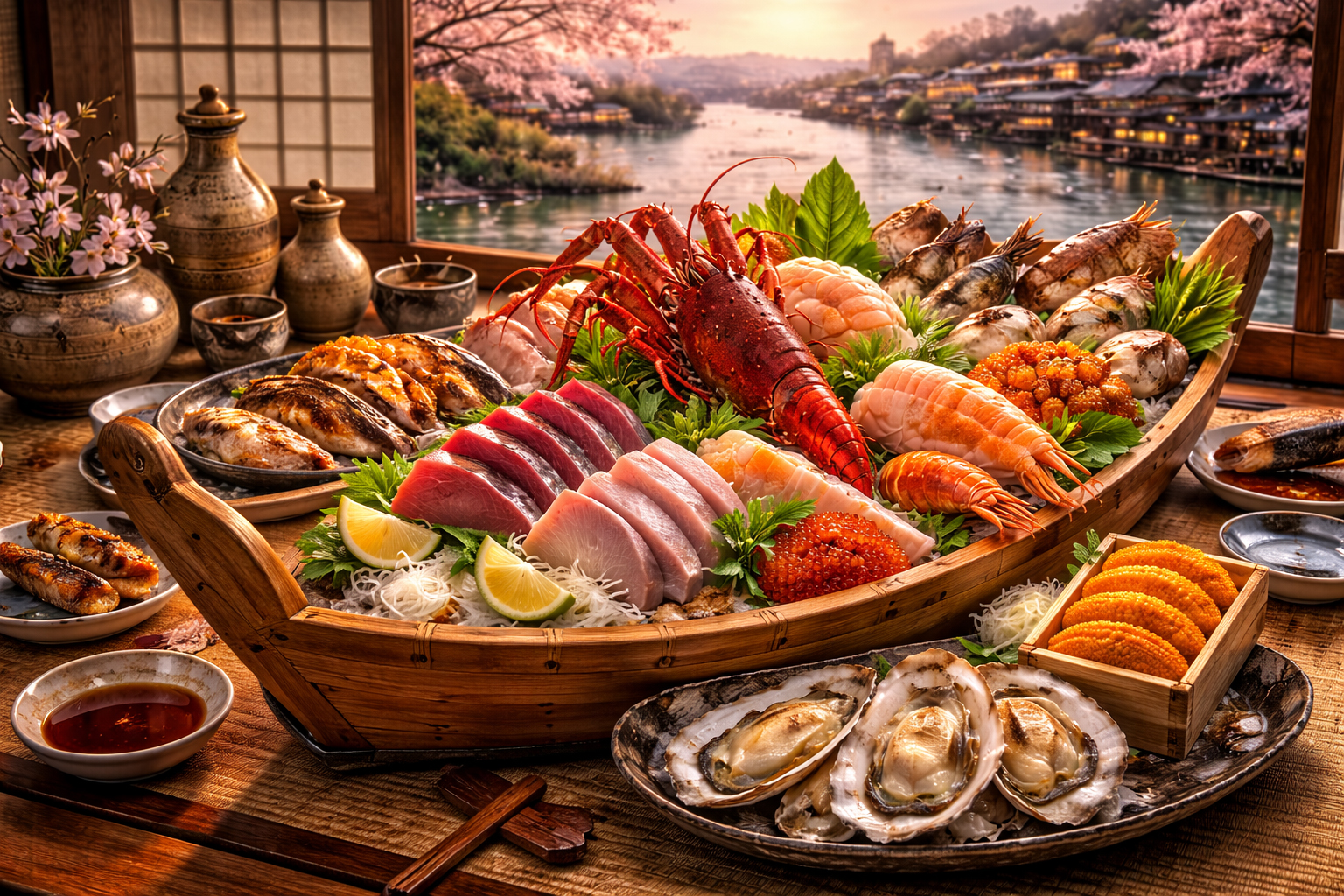
Edo Seafood
How fish became urban culture in merchant-town Edo.
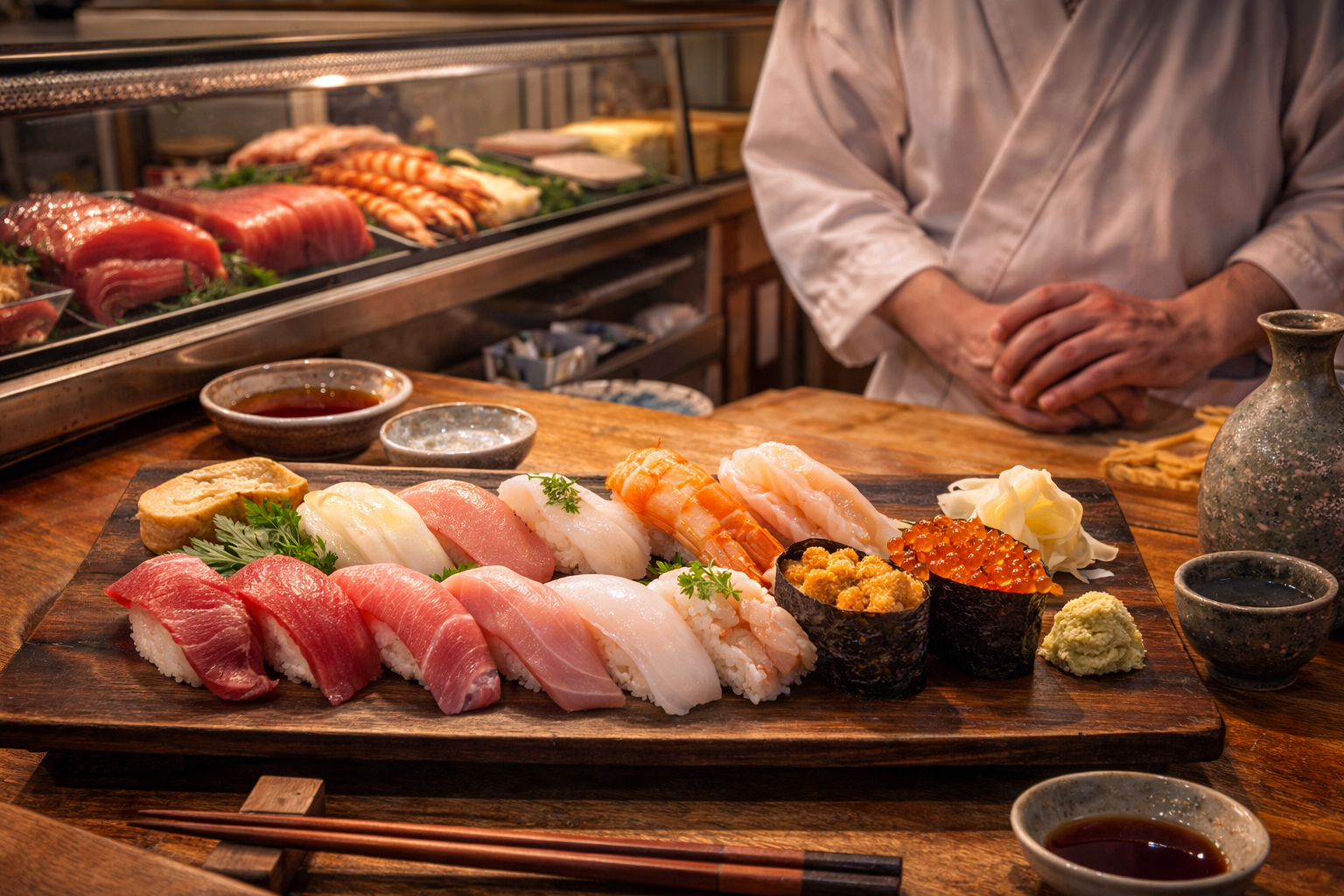
Sushi Counter
The place where fish is not just served but placed, one piece at a time, into a relationship.